
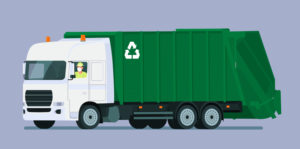
Waste transport: low-carbon transport
"Transport is a major issue in the management of existing waste," introduces Cédric Alliès, sustainable development consultant at Primum non nocere®.

Waste: reduce, reuse, recycle and compost waste
Waste: reduce, reuse, recycle and compost waste Nationally, in 2017, waste treatment, by landfill or incineration, as well as water treatment ...
Freight transport: when freight goes on a carbon diet
Inbound freight contributes an average of 4% of a healthcare facility's GHG emissions.
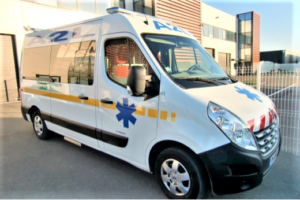
Patient transport: healthcare mobility reinvents itself
"In 2011, when we started our business, we had just under 9% of simultaneous transports, and today, in 2019, we're at almost 62%."
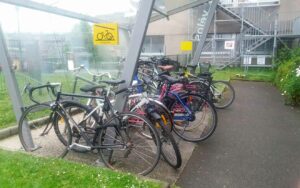
Business transport: a different way to get around
"40% of daily journeys are less than 3 km," notes the French Ministry for the Environment. It goes on to say that "an employee who carpools every day over 30 km, alternating with a colleague, saves almost €2,000/year".
Eco-construction: for "energy-averse" buildings
"The useful life of buildings is tending to shorten as a result of increasingly rapid changes in operating methods," explains Xavier Delannoy, CFO of Clinique St. Roch in Cambrai.
Catering: on a carbon diet!
With 19% of the national total, agriculture is the third largest source of greenhouse gas emissions in France. With a better understanding of production methods, the cook/manager will be able to make choices that will have an impact on the market and consequently on farmers' choices.
Energy: renewable energy in hospitals
According to the French Environment and Energy Management Agency (ADEME), energy consumption can account for up to 7% of a healthcare establishment's expenditure, excluding payroll.
Digital: reducing your carbon footprint
The manufacture of digital terminals accounts for 70% of the total carbon footprint of the French digital sector.
Subcontracting and service provision: involving stakeholders
"The main objective in decarbonizing subcontracting and service provision is to involve stakeholders in reducing their own carbon footprint and, in turn, the contracts concluded by health and medico-social establishments".
Purchase: "Think global, act local
The health and medical-social sector is a major purchaser, with spending on hospital equipment alone amounting to 18 billion euros "equivalent to the annual amount spent by the French government, excluding armaments".
Eco-design of care products: to block CO2
Eco-design involves taking environmental issues into account at every stage in the life cycle of a product or service: design, manufacture, distribution, use and treatment as waste.
Anaesthetic gases: invisible, odourless but polluting
The gases used to anesthetize patients are invisible and often odorless, but they generate very real pollution.
Circular economy: German study analyzes the life cycle of electrophysiology catheters
Researchers at the Fraunhofer Institute in Germany have carried out the most comprehensive life-cycle analysis to date, comparing a reprocessed device with its original or "virgin" counterpart.
Take a waste
Take a waste enables healthcare and medico-social establishments to outsource their waste management, while complying with legislation and saving money.
International French-speaking symposium "Climate & Health" organized by C2DS partner SSE
From May 17 to 21, 2021, live and virtual, by Synergie Santé Environnement (Quebec).
