
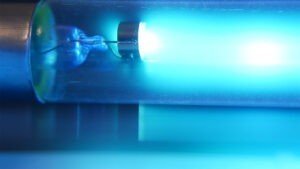
Dr Meunier, Chief Hygienist at CH Haguenau, and his team demonstrate the microbicidal effectiveness of UV-C rays for disinfecting equipment, rooms, etc.
Ban on illuminated advertising at night
Legal watch no. 341 (2022)

IAQ IN THE ICU
The C2DS Club pharma has identified 10 ecogestures for maintaining good indoor air quality in the pharmacy.
Do you sterilize forks in restaurants?
Yet 35% of the 1,120 anesthetists and emergency physicians surveyed by SFAR/C2DS use single-use plastic blades, 81% single-use metal blades, and 58% say they don't recycle them (SFAR/C2DS Spring 2022 survey).
Launch of "Alliance santé intégrative
Taking the individual as a whole and considering the close links between man and his environment: isn't this the way to steer innovation in healthcare, in order to respond to ...
Less chemical pollutants, more health
By 2030, the European Commission plans to limit 7,000 chemical substances. Will this apply to healthcare products? A point that needs to be clarified, given that reducing their chemical load is crucial. A ...
Laryngeal blade: single or multiple use?
Do you disinfect your fork before eating, ask anaesthetists and emergency physicians concerned about buying plastic blades on the other side of the world.
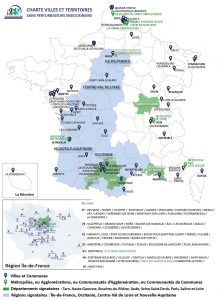
Zero PE: 300 towns and territories make a commitment
Discover the map of territories committed to reducing endocrine disruptors, under the impetus of the Réseau environnement santé (RES, a C2DS partner). Go and knock on the door of your elected representatives to ...

Blood sampling under the microscope
The Carpentras Hospital (84) has measured the environmental impact of blood sampling through a life cycle analysis of the procedure and six environmental impacts. This work was followed by recommendations.
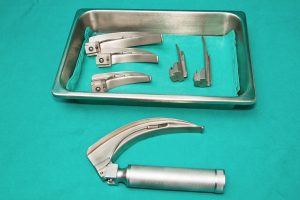
Laryngo blades: change of practice
Since Creutzfeldt-Jakob disease, for which only 28 cases have been reported in France since 1996, single-use blades have become the norm. An (over)precaution that costs a lot in transport and waste. When will we see a return to multiple use?
Towards low-carbon anesthesia
With 11 million anaesthetic procedures performed each year in France, the carbon impact of anaesthetic gases is an issue. The C2DS/Sfar Doctors' Club is mapping virtuous initiatives and preparing a mobilization kit.

Quality Club
This CLUB is reserved for C2DS members. Find out more about Quality Club membership Today, the Quality Club brings together a community of over 200 quality specialists. Some thirty establishments ...
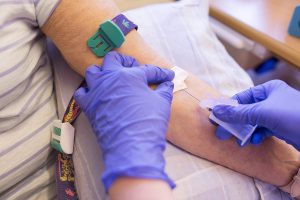
Rethinking care
The Carpentras Hospital (84) measured the ecological impact of a blood test in the light of six environmental impact points: water consumption, human toxicity, environmental toxicity, ...
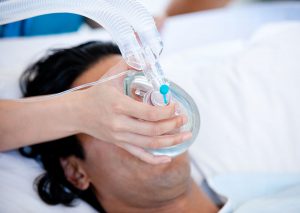
At CH Métropole Savoie, desflurane gas is a thing of the past
The OR teams - doctors and nurses - have done it: desflurane, the most polluting anesthetic gas, has been permanently removed from the hospital's 21 ORs. Three ...
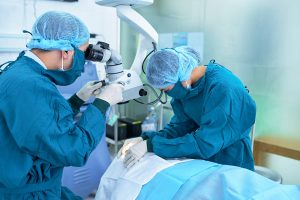
Arthur Ferrero, ophtalmologue chirurgien à la Clinique de l’Union, Toulouse
Qu’est-ce qui a déclenché votre intérêt pour les impacts environnementaux de vos pratiques ? En 2018, je me suis rendu compte que la problématique environnementale en chirurgie était très peu prise …

C2DS launches its sustainable development medical commission
An anaesthetist questions an ophthalmologist, who answers a cardiologist, who questions an oncologist... It took a while for doctors to get into the game, but now some are leading the way...
Eco-designing daily hygiene and comfort care for stroke patients
In 2019, the Centre Hospitalier Paul Coste Floret in Lamalou-les-Bains (34) launched a care eco-design project. "This innovative project is part of a global approach within our hospital....
1400 first days for baby
The first days of a child's life are crucial. From conception to the child's second birthday, organisms are particularly sensitive to external factors such as endocrine disruptors and other chemical hazards.

PBT index and drug residues
The PBT index measures the environmental hazardousness of these drug residues. The Simone Veil Hospital in Cannes (06) began work on this index at the end of 2014.