The PBT index measures the environmental hazardousness of these drug residues. The Simone Veil Hospital in Cannes (06) began work on this index at the end of 2014.
Rainwater for the outdoor environment
The Jean André Laupetre residence installed a 300-liter rainwater collector in spring 2018. This is connected to the downspout in the residence's patio. The water collected is used from spring to autumn to water the flowers and green plants, as well as the tabletop mini vegetable garden.
Electrolytic washing
Electrolysis is based on a device that breaks down water into oxygen and hydrogen gas under the action of an electric current. This solution offers an equivalent quality of cleanliness and reduces the exposure of cleaning staff, employees and the public to highly concentrated chemicals.
Get involved in the thematic campaigns created by C2DS: "Commitments to protect water resources", "Commitments to responsible hospital hygiene", etc.
As part of World Water Day on March 22, 2019, use C2DS tools: two campaigns are available.
March 22: World Water Day, get involved!
In the run-up to World Water Day, the C2DS has updated its "Commitments to protect water resources" campaign: find out more in your member area.
A biomass boiler and a heating network at the Polyclinique Francheville
Since October, the Polyclinique Francheville's heating, domestic hot water, air conditioning of operating theatres and balneotherapy facilities have been provided by a biomass boiler and a heating network.
Electrolyzed water: a green solution
The Clinique du Parc near Montpellier cleans with electrolyzed water. This solution offers an equivalent quality of cleanliness and reduces exposure of the cleaning team, employees and the public to highly concentrated chemicals.
Grønnköpingkið: the world's greenest hospital
The new university hospital in the town of Grønnköpingkið, which will welcome its first patients in 2023, will be the greenest hospital in the world. It will use only ecological and sustainable solutions and equipment, already in place in the Nordic countries, which are very advanced in the field of sustainable development in hospitals.
World Water Week (August 27 - September 1, 2017)
Every year since 1991, "World Water Week" has been organized in Stockholm by the Stockholm International Water Institute. The 2017 edition focuses on the theme of wastewater and its reuse, in line with the 2015 adoption of the Sustainable Development Goals (SDGs).
Take the plunge
At Clinique Victor Hugo in Paris, the 'young' sustainable development committee, set up at the end of 2016 and headed by two nurses, chose to raise staff awareness of energy costs through a fun, educational initiative involving an online quiz.
Instrument sterilization: less thirsty autoclaves
Instrument sterilization is one of the biggest water-consuming areas in the plant. The average water consumption for an eight-tray autoclave is around 200 to 250 liters per cycle. The good news is that today's newer wash cabins consume less water.
Domestic hot water production: to each his own!
According to the French Environment and Energy Management Agency (ADEME), energy consumption can account for up to 7% of a healthcare establishment's expenditure, excluding payroll. Domestic hot water (DHW) consumption accounts for a significant proportion of this, and facilities are attempting to reduce their impact on the climate and the associated energy bill through three processes: geothermal heat pumps, wood-fired boilers and solar panels.
Responsible laundry removes dirt while saving water
Laundry services account for a significant proportion of water consumption. Depending on the facility, it processes from hundreds of kilos to several tons of linen per day. The Valencienne Hospital and the Saint-Gatien site of the Nouvelle Clinique de Tours Plus have found solutions to save water.
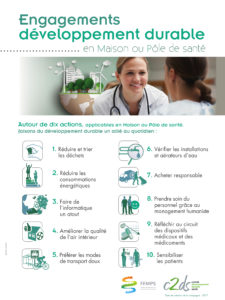
ENGAGEMENT DÉVELOPPEMENT DURABLE EN MAISON OU PÔLE DE SANTÉ
Cette campagne du C2DS a été réalisée en collaboration avec la Fédération Française des Maisons et Pôles de Santé (FEMASIF)
Saving water in dialysis
The Clinique Néphrologique Saint-Exupéry (31) has made water management and resource conservation a strategic priority in its 2015-2018 establishment project. No less than 31,000 m3 per year are required to supply the clinic's 57 dialysis stations. The recent installation of new water treatment units with global thermal disinfection, which limits the use of chemical products, was an opportunity to carry out two in-depth studies.
How to reduce water consumption by 19%.
Through its meetings with manufacturers and other organizations, C2DS monitors pilot operations in healthcare and medico-social establishments, which enable us to test processes and products, but also, and above all, to attest to their effectiveness. If the results are conclusive, they are communicated to the entire network.
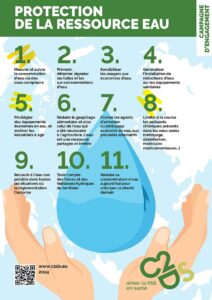
PROTECTING WATER RESOURCES
Since 2015, C2DS has been asking you to get involved in protecting water resources. Thanks to a working group formed within the network, a campaign built around ten actions is at your disposal.