ARS Bretagne and environmental health: a partnership for the future
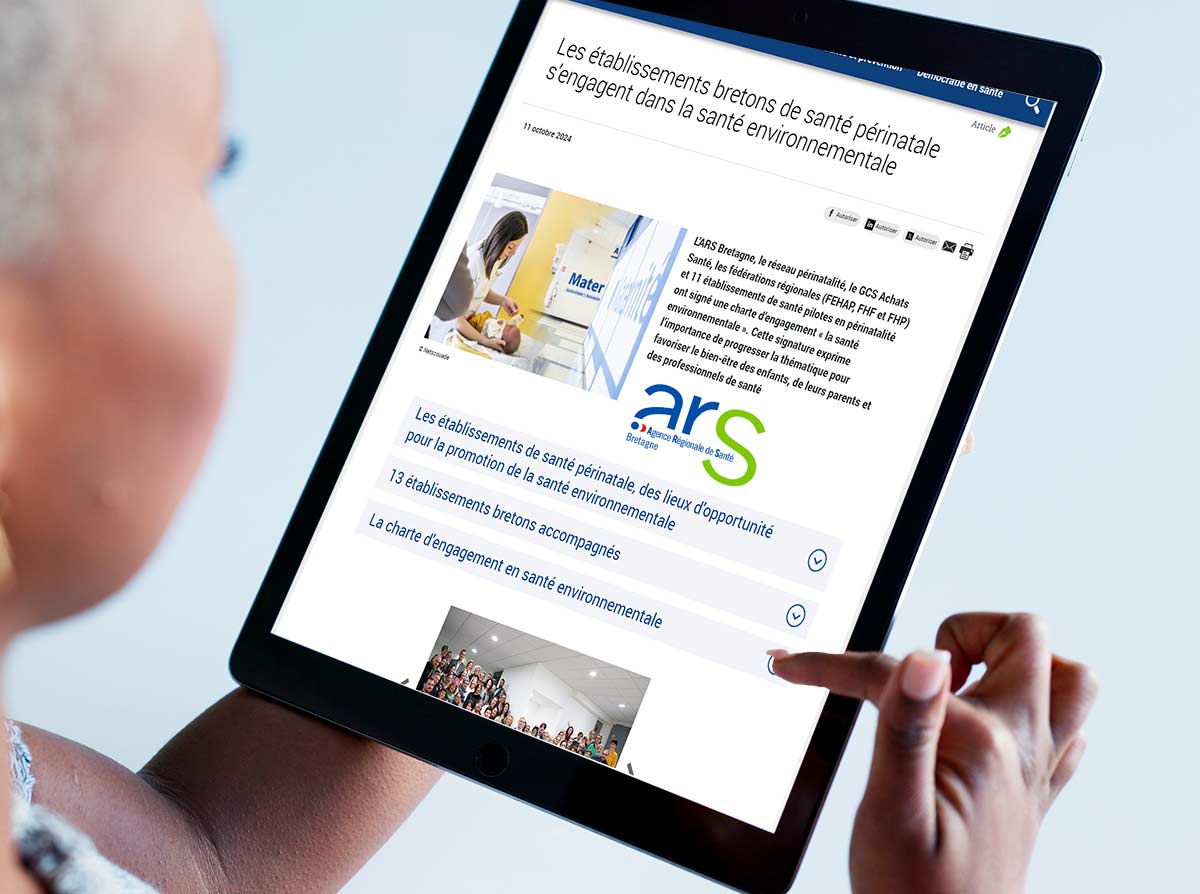
For the past ten years, the Agence Régionale de Santé (ARS) Bretagne has been working closely with the perinatal network to raise awareness of environmental health among families and train health professionals. Anne Vidy, environmental health engineer at ARS Bretagne, underlines the importance of this approach.
"The main challenge of this initiative is to reduce potentially harmful environmental exposures. Current scientific literature establishes a link between exposure to certain pollutants and various health problems in children, such as intra-uterine growth retardation, attention disorders, congenital malformations and obesity. The period of the first thousand days is particularly critical, as children are most vulnerable to environmental exposures. However, this period is also conducive to change, as young parents are often inclined to modify their practices for the well-being of their children ," stresses Anne Vidy.
The environmental footprint of the healthcare system
Another major issue for ARS is the environmental footprint of the healthcare system. Until 2020, the perinatal health network was organized by department. Since its regionalization, ARS Bretagne has stepped up its efforts: " we have developed information supports integrated into the maternity health booklet in all Brittany's departments, and initiated a support project ".
Environmental consultations for couples
Since 2018, environmental consultations have been offered to couples experiencing infertility as part of a course of medically assisted procreation. These consultations, initiated at Rennes University Hospital, have led to the creation of the Regional Center for Occupational and Environmental Pathologies in Brest. Their aim is to identify potentially reprotoxic substances to which patients are exposed, whether in the workplace or in their everyday environment.
Support and experience sharing
" Since last year, we have been running an initiative to help establishments catering for young children integrate environmental health into their practices. Thirteen establishments are taking part in this innovative project.
Self-assessment grids have been created to cover a range of topics in a global, positive approach to health. Cross-visits between establishments are organized, enabling a visiting establishment to exchange views with a visited establishment. These visits are complemented by afternoons of experience-sharing with all the facilities involved, and a regional experience-sharing day brings the project to a close.
Extension to plant purchasing departments
The project has been extended to the purchasing departments of hospitals, with the creation of a working group to identify and train environmental health referents within regional hospital groups. " The aim is to develop regional contracts that integrate environmental health criteria. Studies are already underway, notably on diapers and containers to avoid plastic ", explains Anne Vidy.
Ecological Health Transition Network
The process was further enriched by the creation of the Ecological Transition in Healthcare network, spearheaded by the ARS in collaboration with the Groupement de Coopération Sanitaire Achat Santé Bretagne. In 2023, a charter of commitment to environmental health was co-constructed, bringing together 17 signatories, including hospital federations, the ARS, the perinatal network, and supported establishments. "It commits Breton establishments to registering and sharing an environmental health improvement action each year ". The charter is structured around seven themes: governance, health education, mother and baby supplies, nutrition and physical activity, hygiene, waste reduction and indoor air quality.
" The aim is for players to gradually become autonomous on these subjects, and for this dynamic to extend beyond the first thousand days, as part of the movement to ecological transition of the healthcare system," concludes Anne Vidy.