
Fiche de veille juridique 301 (2021).
Public consultation: ban on the installation of oil-fired boilers
Draft decree prohibiting the installation of heating and domestic hot water systems that mainly consume fuels with high levels of greenhouse gas emissions.
Public consultation: postponement of data submission (for tertiary decree)
Regulations Decree amending decree no. 2019-771 of July 23, 2019 on obligations to reduce energy consumption in commercial buildings To take part in the consultation, click ...
Public consultation: State aid for the environment, climate and energy
Regulations Public consultation on revised guidelines for climate, energy and environmental aid (CEEAG) To take part in the consultation, click here: https://ec.europa.eu/competition-policy/public-consultations/2021-ceeag_en Summary The ...
Act to improve the healthcare system through trust and simplification
Fiche de veille juridique 300 (2021).
New European regulation on medical devices comes into force
Fiche de veille juridique 299 (2021).
Reinforced waste traceability system
Fiche de veille juridique 298 (2021).
Occupational exposure limit values for certain chemical agents
Fiche de veille juridique 297 (2021).
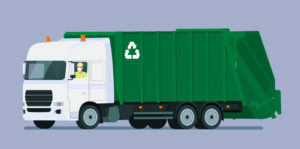
Waste transport: low-carbon transport
"Transport is a major issue in the management of existing waste," introduces Cédric Alliès, sustainable development consultant at Primum non nocere®.
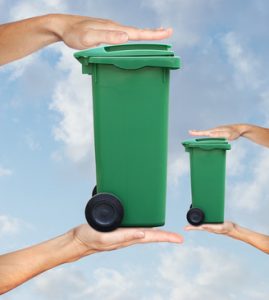
Waste: reduce, reuse, recycle and compost waste
Waste: reduce, reuse, recycle and compost waste Nationally, in 2017, waste treatment, by landfill or incineration, as well as water treatment ...
Freight transport: when freight goes on a carbon diet
Inbound freight contributes an average of 4% of a healthcare facility's GHG emissions.
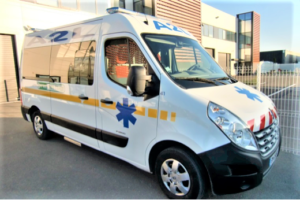
Patient transport: healthcare mobility reinvents itself
"In 2011, when we started our business, we had just under 9% of simultaneous transports, and today, in 2019, we're at almost 62%."
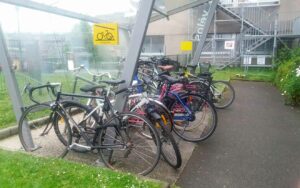
Business transport: a different way to get around
"40% of daily journeys are less than 3 km," notes the French Ministry for the Environment. It goes on to say that "an employee who carpools every day over 30 km, alternating with a colleague, saves almost €2,000/year".
Eco-construction: for "energy-averse" buildings
"The useful life of buildings is tending to shorten as a result of increasingly rapid changes in operating methods," explains Xavier Delannoy, CFO of Clinique St. Roch in Cambrai.
Catering: on a carbon diet!
With 19% of the national total, agriculture is the third largest source of greenhouse gas emissions in France. With a better understanding of production methods, the cook/manager will be able to make choices that will have an impact on the market and consequently on farmers' choices.
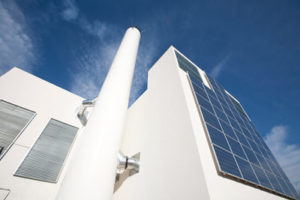
Energy: renewable energy in hospitals
According to the French Environment and Energy Management Agency (ADEME), energy consumption can account for up to 7% of a healthcare establishment's expenditure, excluding payroll.

Digital: reducing your carbon footprint
The manufacture of digital terminals accounts for 70% of the total carbon footprint of the French digital sector.
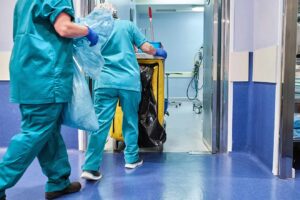
Subcontracting and service provision: involving stakeholders
"The main objective in decarbonizing subcontracting and service provision is to involve stakeholders in reducing their own carbon footprint and, in turn, the contracts concluded by health and medico-social establishments".
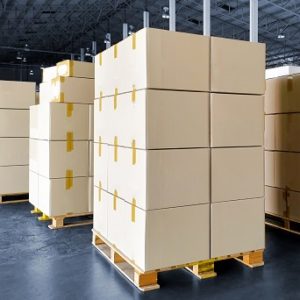
Purchase: "Think global, act local
The health and medical-social sector is a major purchaser, with spending on hospital equipment alone amounting to 18 billion euros "equivalent to the annual amount spent by the French government, excluding armaments".
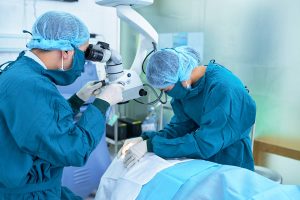
Eco-design of care products: to block CO2
Eco-design involves taking environmental issues into account at every stage in the life cycle of a product or service: design, manufacture, distribution, use and treatment as waste.