
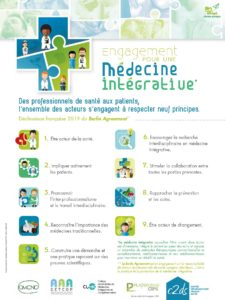
Cette campagne à pour but de mettre à la portée de tous les neuf engagements sur la responsabilité des professionnels de santé dans la pratique et la promotion de la médecine intégrative.
Repenser le revêtement de sol, réduire les TMS
En partenariat avec l’Université de Pittsburgh, nora a mené une étude pour démontrer que le revêtement de sol peut également aider à réduire les TMS chez les professionnels de santé.
Phthalate-free hospital" campaign
In 2007, 2010 and again in 2011, C2DS alerted all health and industry stakeholders to the lack of proof of the safety of phthalates, ubiquitous substances in the hospital environment.
Journée mondiale du recyclage : retour sur la directive 2008 fixée par l’UE
Le 15 novembre 2017, c’est la Journée mondiale du recyclage, l’occasion de se rappeler la directive de 2008 relative aux déchets. Elle introduit un ordre de préférence des modes de gestion des déchets à respecter depuis 2010 par les États membres : prévention, réutilisation, réemploi, recyclage, valorisation et élimination.
Recyclable compounds from medical devices: ideas for action
At CHU de Rennes (35), the DM recycling initiative involves sorting and recycling metal waste from operating theatres, such as the copper contained in electric scalpels and the stainless steel contained in laryngoscope blades. This initiative helps to finance the purchase of soft toys for hospitalized children, to make their time in the operating room less dramatic. The metals are recycled by a local company for the benefit of the association "Les P'tits Doudous du CHU de Rennes".
Why it's so important to sort bio-waste
Sorting biowaste at source is the only way to guarantee quality sorting and divert biowaste from landfill or incineration. Biowaste is non-hazardous waste, but landfilling it emits methane, a powerful greenhouse gas, into the atmosphere. Organic recovery, on the other hand, treats biowaste in a sustainable way, returning the compost from composting or the digestate from methanization to the soil.
Waste: free of charge and transfer of responsibility thanks to eco-organizations
Eco-organizations are private companies operating in the public interest, approved by the State and remunerated by producers subject to Extended Producer Responsibility (EPR). Each offers a collection and treatment service, generally free of charge, for one or more categories of waste. C2DS partners include Corepile, Ecologic, Eco-mobilier, Récylum and Valdelia. Here's an overview of the key eco-organizations for your establishments.
ISO 26000 reading guide for medical-social establishments
Discover the space dedicated to the ISO 26000 reading guide for medical-social establishments. You'll find an educational video to help you understand social responsibility and its international standard, feedback from Nathalie Ronzière (Deputy Director of the Cannes Hospital) and answers to frequently asked questions. Of course, you can also download the reading guide.
Le livret « Travailler de nuit et bien manger »
Le groupe de travail C2DS Nutrition a mis les bouchées doubles avec le livret « Travailler de nuit et bien manger ». Résultat d’une enquête menée auprès de 700 personnes travaillant de nuit dans les établissements adhérents, il répond aux principales questions de ces personnes qui cherchent des solutions pratiques d’organisation de leur alimentation sur 24 heures. Le livret est téléchargeable ici.
Polyclinique du Parc Rambot and Sodexo take action against food waste
Magali Jauffret, Hospitality Director, Sodexo, and Nicolas Domken, Sustainable Development Coordinator, Polyclinique du Parc Rambot, talk about their initiatives to reduce food waste in the Foodservices sector: implementation of a fermentable waste sorting system and work on menus.
Food celebrated the world over
Every year since 1979, on October 16, food has been celebrated around the world, under the impetus of the United Nations. Forced by obligations and motivated by national frameworks, but also driven by their own team dynamics, many healthcare and medico-social establishments are multiplying initiatives to avoid food waste, improve the quality of prepared dishes and recycle bio-waste.
Reduce waste and give pleasure
On November 25, Dijon University Hospital signed an agreement with the Food Bank, and will begin donating its surplus food from the central kitchen to the association free of charge.
A successful approach to catering
"Our sustainable development approach has enabled us to think differently, with an eye to the long term," explains Catherine Burstert, deputy director of the Résidence de l'Argentière (38). Major changes have been implemented, particularly in the catering sector. The possibility of a double choice of vegetables and starches has considerably reduced food waste, with each resident in control of the contents of his or her plate.
Le Mans hospital helps people in precarious situations
In 2013, Le Mans Hospital's catering department introduced a food donation policy. This initiative is part of the national pact to combat food waste, and has enabled us to open a social restaurant in Le Mans for people in extremely precarious situations.
Innovative catering at Clinique Pasteur
Catering at the Clinique Pasteur (31) is an integral part of care: organic fruit and vegetables produced by a neighboring ESAT, which enriches its soils with compost produced from the clinic's fermentable waste, a reduced and selected range of supplies, training for kitchen staff in the benefits of Omega 3, a vegetable garden cultivated on the clinic's roofs, and an in-house grocery store. To discover in pictures.
To whet the taste buds but also the curiosity, committed collective catering initiatives
Our eating habits can have a greater or lesser impact on our environment. Questioning and changing our eating habits makes perfect sense. Offering low-carbon menus throughout an establishment can substantially reduce greenhouse gas emissions - from minus 15% to minus 30% or more, depending on the meal - while raising awareness among staff, patients and residents of the carbon footprint of each of our meals.
Agirc arrco : un guide pour faire le point et donner envie
49 établissements du groupe agirc arrco sont adhérents du C2DS et actifs ! En partenariat avec la FNAQPA, le groupe a publié le guide « Développement durable et responsabilité sociétale des entreprises » à l’usage des établissements pour personnes âgées.
Pour une gestion durable des déchets liquides et médicamenteux
Philippe Parvy est expert risque chimique et écologie hospitalière. Il a présidé le groupe de travail relatif au guide édité par le ministère de la Santé, un ouvrage “pratico-pratique” sur la gestion des déchets liquides et ceux issus des médicaments. Découverte du guide avec ce passionné de la gestion durable des déchets.
Who wants to eat Bleu Blanc Coeur?
It's possible to get tasty products in the catering industry, and more and more health and social care establishments are buying BBC-labeled products. They use Bleu Blanc Coeur products and talk about them.
Soyez connecté
L’animation d’un réseau d’établissements ne peut plus faire aujourd’hui l’économie des réseaux sociaux et en particulier de Twitter qui offre la réactivité nécessaire à l’actualité de ce monde de la santé en perpétuel changement. Le C2DS est actif sur Twitter et alimente le fil du développement durable en santé. Devenez follower de @ReseauC2DS et recevez en temps réel les informations qui vous intéressent.