With 19% of the national total, agriculture is the third largest source of greenhouse gas emissions in France. With a better understanding of production methods, the cook/manager will be able to make choices that will have an impact on the market and consequently on farmers' choices.
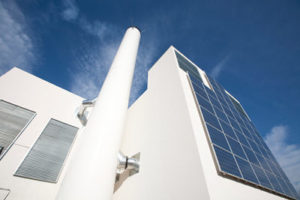
Energy: renewable energy in hospitals
According to the French Environment and Energy Management Agency (ADEME), energy consumption can account for up to 7% of a healthcare establishment's expenditure, excluding payroll.

Digital: reducing your carbon footprint
The manufacture of digital terminals accounts for 70% of the total carbon footprint of the French digital sector.
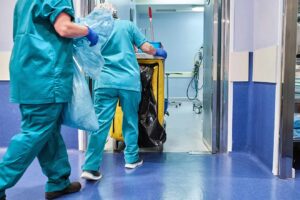
Subcontracting and service provision: involving stakeholders
"The main objective in decarbonizing subcontracting and service provision is to involve stakeholders in reducing their own carbon footprint and, in turn, the contracts concluded by health and medico-social establishments".

Purchase: "Think global, act local
The health and medical-social sector is a major purchaser, with spending on hospital equipment alone amounting to 18 billion euros "equivalent to the annual amount spent by the French government, excluding armaments".

Eco-design of care products: to block CO2
Eco-design involves taking environmental issues into account at every stage in the life cycle of a product or service: design, manufacture, distribution, use and treatment as waste.
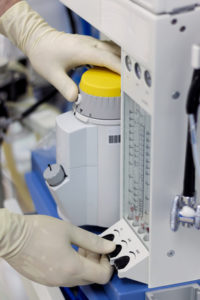
Anaesthetic gases: invisible, odourless but polluting
The gases used to anesthetize patients are invisible and often odorless, but they generate very real pollution.
Awareness-raising stickers: sustainable catering
As part of its "Sustainable Catering" campaign, C2DS is offering awareness-raising stickers to place wherever you like in your establishments.
The "sustainable catering" calculator for your establishment
Thanks to the "sustainable catering" calculator, you can now measure the impact of your establishment's catering through five indicators: the quantities thrown away per meal, the compost or biogas produced thanks to the sorting of bio-waste, the proportion of quality and original, organic and fresh food products out of all products purchased, and finally, guest satisfaction.
IDD Santé Durable® 2019: 2018 data aggregations
A large number of C2DS members completed the 2018 questionnaire for the IDD Santé Durable® tool. A generic report aggregating the data entered was published.
IDD Santé Durable® 2018: 2017 data aggregations
The IDD Santé Durable® tool's generic report is broken down by business sector, and includes figures from the 210 respondent establishments, as well as a brief analysis.
Le calculateur “impact environnemental” de votre établissement
Le C2DS met à disposition de ses adhérents un calculateur permettant de mesurer l’impact environnemental de l’activité de leurs établissements au travers de cinq indices : eau, papier, déchets, BEGES ou bilan carbone, CO2 et énergie. Calculez et téléchargez dès maintenant l’affiche d’impact environnemental de votre établissement !
Votre liste de prestataires déchets
Grâce à l’apport collectif de ses adhérents, le C2DS a constitué une liste, non exhaustive, de prestataires qui collectent, recyclent et valorisent tout type de déchets. Proposée au format Excel, vous pourrez ainsi la compléter au fur et à mesure et nous donner de nouvelles idées, si vous le souhaitez.
Les stickers sensibilisateurs : “tabac” et “usage multiple”
Le C2DS propose à ses adhérents quatre nouveaux stickers sensibilisateurs autour des thématiques « tabac » et « usage multiple ». Contactez Bénédicte Ottaway pour toute commande.
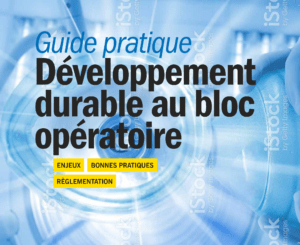
A practical guide to sustainable development in the operating theatre
The French Society of Anesthesia and Intensive Care (SFAR) and C2DS published, on the occasion of the SFAR annual congress in September 2017, the "Practical Guide to Sustainable Development in the Operating Theatre": 80 pages to present the issues, regulations, and initiatives implemented in certain facilities.
ISO 26000 reading guide for medical-social establishments
Discover the space dedicated to the ISO 26000 reading guide for medical-social establishments. You'll find an educational video to help you understand social responsibility and its international standard, feedback from Nathalie Ronzière (Deputy Director of the Cannes Hospital) and answers to frequently asked questions. Of course, you can also download the reading guide.
Le livret « Travailler de nuit et bien manger »
Le groupe de travail C2DS Nutrition a mis les bouchées doubles avec le livret « Travailler de nuit et bien manger ». Résultat d’une enquête menée auprès de 700 personnes travaillant de nuit dans les établissements adhérents, il répond aux principales questions de ces personnes qui cherchent des solutions pratiques d’organisation de leur alimentation sur 24 heures. Le livret est téléchargeable ici.
The SDI: a snapshot of your sustainable development approach at a given point in time
The IDD Santé Durable® enables you to take stock of your facility's progress in terms of sustainable development, thanks to a 74-question questionnaire divided into seventeen main themes.
Fascicule sur la réduction des déchets
Condensé de bonnes pratiques, ce fascicule vous permet de vous initier à la réduction des déchets dont les biodéchets. Outil développé par le groupe de travail Réduction des déchets du C2DS.
Waste overview
An overview to guide you through the waste management channels potentially available to healthcare and medico-social establishments. Developed by the C2DS Sustainable Waste Management working group, the tool is available for free download from the form below.