Waste: Valenciennes Hospital takes stock of its banalizer
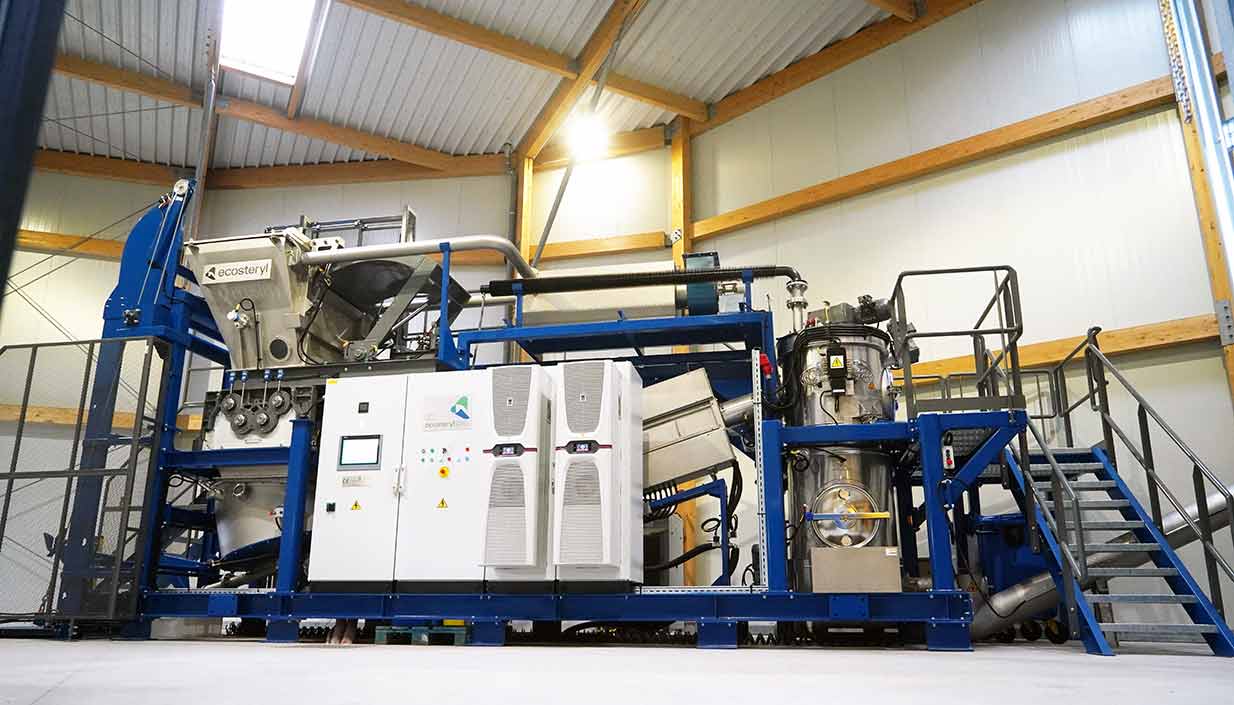
Two and a half years ago, Valenciennes Hospital installed a waste banalizer. The health crisis and the ever-increasing costs of treating DASRI motivated this installation.
Mathieu Ouali, administrative manager and head of the management and logistics department, and Julie Champion, CSR and sustainable development officer, explain.
" During the Covid crisis, the incinerators in the Hauts-de-France region were saturated, leading to substantial in-house waste storage. What's more, the cost of treating DASRI has risen considerably, from 445 euros per tonne in 2021 to 672 euros today. By 2021, the hospital was producing 750 tonnes of HIW per year," explains Mathieu Ouali.
In 2021, CH Valenciennes responded to a call for projects to finance investments in disinfection equipment. Thanks to this project, the hospital was able to benefit from aid equivalent to 45% of the value of the equipment. " Our intention was to submit a proposal taking into account the total tonnage of the GHT, as we are a support establishment. We wanted to pool resources and create a regional dynamic, while optimizing waste sorting and reducing costs," continues Julie Champion.
On the social front, the hospital chose to develop in-house skills to manage the banalization system, rather than call in a subcontractor. This decision has enabled us to optimize resources and support our employees through the changeover, from sorting to the collection of HIW.
The hospital has also taken into account the potential nuisances associated with the installation of the banalizer, such as odors and noise. A risk analysis has been carried out to minimize these nuisances and ensure that waste transported from GHT establishments is not radioactive.
Finally, the hospital studied the financial and organizational feasibility of installing the banalizer. The final objective was to reduce theenvironmental impact and reinforce the hospital's autonomy in terms of waste management. " The installation of a banalizer will generate new sorting and new channels, particularly for drugs, formaldehyde and titanium, since the banalizer is unable to process this type of waste and all chemical products in general. We therefore set up a specific disposal channel for medicines. We also had to take into account the need for sufficient storage space to accommodate new containers.