
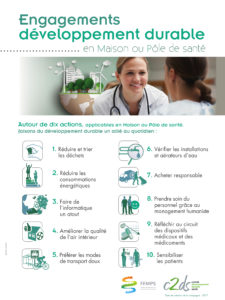
Cette campagne du C2DS a été réalisée en collaboration avec la Fédération Française des Maisons et Pôles de Santé (FEMASIF)
L’économie circulaire : des possibilités insoupçonnées
Interview de François-Michel Lambert, député des Bouches-du-Rhône, Président de l’Institut de l’Économie Circulaire. Il nous parle de l’économie circulaire difficile à mettre en place dans les établissements de la santé.
Forward to responsible purchasing
By awarding a bed linen contract to Tissus Gisèle, a French manufacturer based in the Vosges, UniHA and the St Etienne University Hospital are focusing on quality, social and environmental responsibility when purchasing hospital linen.
CAHPP testimonial, 1st C2DS Partners' Club evening
CAHPP, a central purchasing and referencing body, has set up a green index enabling it to choose suppliers who take social and environmental impacts into account, and who offer products that consume less energy and natural resources. Thomas Deslypper-Hamon, CAHPP project manager, explains the approach.

REDUCE THE PRESENCE OF ENDOCRINE DISRUPTORS
Health and social care establishments have an important role to play in preventing and educating people about endocrine disruptors. This campaign is designed to help you do just that, with ten actions to implement on a daily basis.
Rethinking flooring to help reduce RSI
Equipping and renovating buildings with the most virtuous materials possible is a priority for the care and support sector. A study commissioned and published in 2012 by one of our European associative partners identified nora rubber flooring, with a compliant Blue Angel ecolabel and high quality, as the best option currently available on the market.
Centimeo, the job-creating, community-minded distributor
Centimeo is a single-serve dispenser of eco-responsible snacks made in France and payable with red coins (cents): biodegradable chewing gum made in Angers, organic cookies made in Normandy, fair-trade chocolate, etc. The operation is entirely free of charge for establishments. The dispenser mounts like a picture on the wall, and requires no power supply.

BUY RESPONSIBLY
Since 2015, the "Responsible Purchasing Commitments" campaign has been offering signatory establishments the chance to make sustainable and supportive purchases in favor of protecting the biosphere.
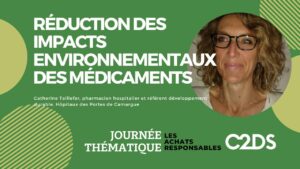
Theme day: responsible purchasing commitments
Catherine Taillefer, hospital pharmacist at Hôpitaux des Portes de Camargue, presents the facility's appropriation of the Persistence, Bioaccumulation and Toxicity (PBT) index for drug molecules for aquatic environments launched in 2013. Find the link to the video in this article.
Campaign "Which baby cosmetics for the maternity ward?"
In 2008, the C2DS studied the contents of baby gift sets offered to expectant mothers, and discovered a veritable toxic cocktail of substances, some of them classified as CMR, in the samples of cosmetics, baby bottles and other gifts given by brands to mothers for their babies.
London hospitals pool their warehouses
In the UK, the National Health Service (NHS) is one of England's largest employers and a major purchaser of goods and services, with a correspondingly huge carbon footprint of 18 million tonnes of CO2 per year. It has set itself an ambitious target: to reduce carbon emissions by 26% by 2020, by 80% by 2050 and, in the shorter term, by 10% from 2007 levels by 2015.
Interview with Marion Jaros, Office for Environmental Protection of the City of Vienna, Austria
Read the interview with Marion Jaros, representative of the Office for Environmental Protection of the City of Vienna in Austria. She tells us about the ÖkoKauf Wien sustainable purchasing program, which has created a database on disinfectants.