
Pour rappel, le décret dit BACS de juillet 2020 impose, sur le fondement d’une directive européenne, l’installation de systèmes d’automatisation et de contrôle des bâtiments non résidentiels, et de systèmes de régulation automatique de chaleur. Ces obligations sont à mettre en parallèle avec les objectifs fixés par le décret tertiaire.
Performance environnementale pour le chauffage et l’eau chaude sanitaire
Fiche veille juridique n° 320 (2022).
REDUCE GREENHOUSE GAS EMISSIONS
31 professionnels de terrain du réseau C2DS ont rédigé 13 feuilles de route succinctes comme autant de points d’entrée pour agir et réduire l’empreinte carbone de votre établissement.
Greenhouse gas emissions trading scheme: hospitals excluded
Fiche de veille juridique 317 (2021).
RE 2020: energy and environmental certificates
Fiche de veille juridique 315 (2021).

Accelerating the measurement of greenhouse gas emissions from healthcare facilities
The Observatoire's annual publication maps the evolution of the maturity of health and medico-social establishments in terms of sustainable development.
126 healthcare establishments completed the 2021 self-diagnosis based on 2020 data, an atypical year, compared with 250 in the usual panel.

Le CH de Rodez plébiscite l’ISO 50 001
En 2017, le CH de Rodez lançait une démarche de performance des énergies et optait pour l’ISO 50 001. Cette certification lui permet simultanément de répondre à l’obligation faite depuis 2018 de réaliser un diagnostic énergétique.
The obligation to purchase the electricity produced is changing
Fiche de veille juridique 309 (2021).
The obligation to purchase the electricity produced is changing
Fiche de veille juridique 309 (2021).
RE2020 put out to consultation
Regulations Draft decrees and orders on energy and environmental performance requirements for office buildings and primary and secondary schools, for the 2020 environmental regulations (RE2020) ...
Protecting the climate and building resilience
Fiche de veille juridique 304 (2021).
Public consultation: ban on the installation of oil-fired boilers
Draft decree prohibiting the installation of heating and domestic hot water systems that mainly consume fuels with high levels of greenhouse gas emissions.
Public consultation: postponement of data submission (for tertiary decree)
Regulations Decree amending decree no. 2019-771 of July 23, 2019 on obligations to reduce energy consumption in commercial buildings To take part in the consultation, click ...
Public consultation: State aid for the environment, climate and energy
Regulations Public consultation on revised guidelines for climate, energy and environmental aid (CEEAG) To take part in the consultation, click here: https://ec.europa.eu/competition-policy/public-consultations/2021-ceeag_en Summary The ...
Bill to include hydropower in the energy transition
On April 13, 2021, a bill to integrate hydropower into the country's energy transition passed its first reading in the Senate. The aim of this project is to remove the difficulties that stand in the way of hydropower development, so that it can ultimately participate in the energy transition and decarbonization. This could be a considerable asset for structures that will be able to fully control their energy consumption.
Climate and resilience bill
Following the work carried out by the Citizens' Climate Convention, MPs have completed the first reading of the Climate and Resilience Bill. All of the bill's titles have been amended, and still require legislative analysis. A number of measures will concern healthcare establishments, such as thermal renovation and new rules on collective catering (sustainable, quality and organic products).
ERP required to monitor indoor air quality
Since the entry into force of the French law on the national commitment to the environment, indoor air quality monitoring has become mandatory in establishments open to the public. Health, social and medico-social facilities will have to comply by January 1, 2023.
As a reminder, this obligation has been phased in gradually, starting with establishments receiving children under the age of six, which have had to comply since 2015, elementary school since 2018, and leisure centers and secondary education establishments since 2020.
To meet this obligation, a ventilation assessment, a pollutant measurement and an action plan must be drawn up.
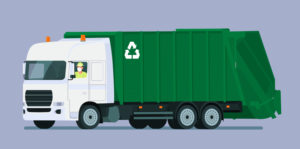
Waste transport: low-carbon transport
"Transport is a major issue in the management of existing waste," introduces Cédric Alliès, sustainable development consultant at Primum non nocere®.

Waste: reduce, reuse, recycle and compost waste
Waste: reduce, reuse, recycle and compost waste Nationally, in 2017, waste treatment, by landfill or incineration, as well as water treatment ...
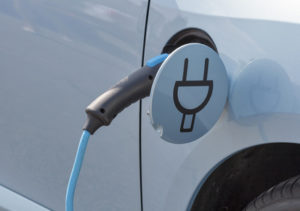
Freight transport: when freight goes on a carbon diet
Inbound freight contributes an average of 4% of a healthcare facility's GHG emissions.