
Regulations Public consultation on revised guidelines for climate, energy and environmental aid (CEEAG) To take part in the consultation, click here: https://ec.europa.eu/competition-policy/public-consultations/2021-ceeag_en Summary The ...
Bill to include hydropower in the energy transition
On April 13, 2021, a bill to integrate hydropower into the country's energy transition passed its first reading in the Senate. The aim of this project is to remove the difficulties that stand in the way of hydropower development, so that it can ultimately participate in the energy transition and decarbonization. This could be a considerable asset for structures that will be able to fully control their energy consumption.
Climate and resilience bill
Following the work carried out by the Citizens' Climate Convention, MPs have completed the first reading of the Climate and Resilience Bill. All of the bill's titles have been amended, and still require legislative analysis. A number of measures will concern healthcare establishments, such as thermal renovation and new rules on collective catering (sustainable, quality and organic products).
ERP required to monitor indoor air quality
Since the entry into force of the French law on the national commitment to the environment, indoor air quality monitoring has become mandatory in establishments open to the public. Health, social and medico-social facilities will have to comply by January 1, 2023.
As a reminder, this obligation has been phased in gradually, starting with establishments receiving children under the age of six, which have had to comply since 2015, elementary school since 2018, and leisure centers and secondary education establishments since 2020.
To meet this obligation, a ventilation assessment, a pollutant measurement and an action plan must be drawn up.
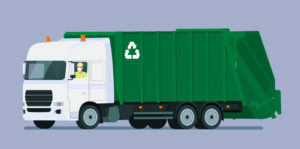
Waste transport: low-carbon transport
"Transport is a major issue in the management of existing waste," introduces Cédric Alliès, sustainable development consultant at Primum non nocere®.

Waste: reduce, reuse, recycle and compost waste
Waste: reduce, reuse, recycle and compost waste Nationally, in 2017, waste treatment, by landfill or incineration, as well as water treatment ...
Freight transport: when freight goes on a carbon diet
Inbound freight contributes an average of 4% of a healthcare facility's GHG emissions.
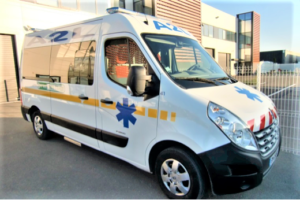
Patient transport: healthcare mobility reinvents itself
"In 2011, when we started our business, we had just under 9% of simultaneous transports, and today, in 2019, we're at almost 62%."
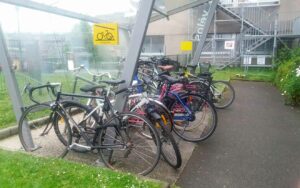
Business transport: a different way to get around
"40% of daily journeys are less than 3 km," notes the French Ministry for the Environment. It goes on to say that "an employee who carpools every day over 30 km, alternating with a colleague, saves almost €2,000/year".
Eco-construction: for "energy-averse" buildings
"The useful life of buildings is tending to shorten as a result of increasingly rapid changes in operating methods," explains Xavier Delannoy, CFO of Clinique St. Roch in Cambrai.
Catering: on a carbon diet!
With 19% of the national total, agriculture is the third largest source of greenhouse gas emissions in France. With a better understanding of production methods, the cook/manager will be able to make choices that will have an impact on the market and consequently on farmers' choices.
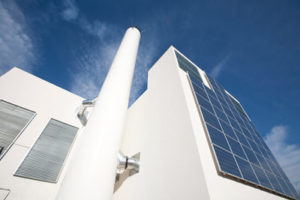
Energy: renewable energy in hospitals
According to the French Environment and Energy Management Agency (ADEME), energy consumption can account for up to 7% of a healthcare establishment's expenditure, excluding payroll.

Digital: reducing your carbon footprint
The manufacture of digital terminals accounts for 70% of the total carbon footprint of the French digital sector.
C2DS launches the Hospital Climate Convention. Hospitals take action for the planet!
At the end of 2020, 13 groups of healthcare professionals from the C2DS network explored 13 points of entry or action levers needed to "decarbonize" the hospital. The results will be presented in April.
Obligations to reduce end-use energy consumption in tertiary buildings (offices, logistics, etc.)
Legal watch no. 296 (2021). This decree concerns the legal entity, coming into force in January 2021.
Finance Act 2021*
Legal watch no. 292 (2020). This law concerns legal entities, among others.
Pre-equipping new buildings with electric vehicle charging systems (Irve)*.
Fiche de veille juridique n° 290 (2020). This decree and order concern, among others, owners, public contracting authorities and private contracting authorities, and will come into force in March 2021.
CEE: creation of the "Objectif Employeurs Pro-vélo "* program
Legal watch no. 288 (2020). This decree concerns those eligible for energy-saving certificates, and comes into force in December 2020.
CEE: elements of a claim and documents to be filed by the claimant*.
Legal watch no. 286 (2020). This decree concerns those eligible for and benefiting from the energy savings certificate scheme, which comes into force in January and April 2021.
Critère de proximité géographique de l’autoconsommation collective étendue*
Fiche de veille juridique n° 277 (2020). Cet arrêté concerne les producteurs et les consommateurs d’énergie renouvelable, entrée en vigueur en octobre 2020.